Semi-Automated Annotation: Machine Drafts, Humans Decide

TLDR: Models draft every label first for speed. Humans confirm every label before it ships. The pipeline enforces that order: drafts can never overwrite human work, low-confidence output never reaches an annotator, and every file carries its draft status until review closes it.
Fully manual annotation is accurate and slow. Fully automated labeling is fast and untrustworthy. We run the middle that holds up in production: machine first pass, human correction, independent review.
How is each draft made?
Every modality has a draft path that runs before any human opens the file.
| Track | Draft source | What the draft contains |
|---|---|---|
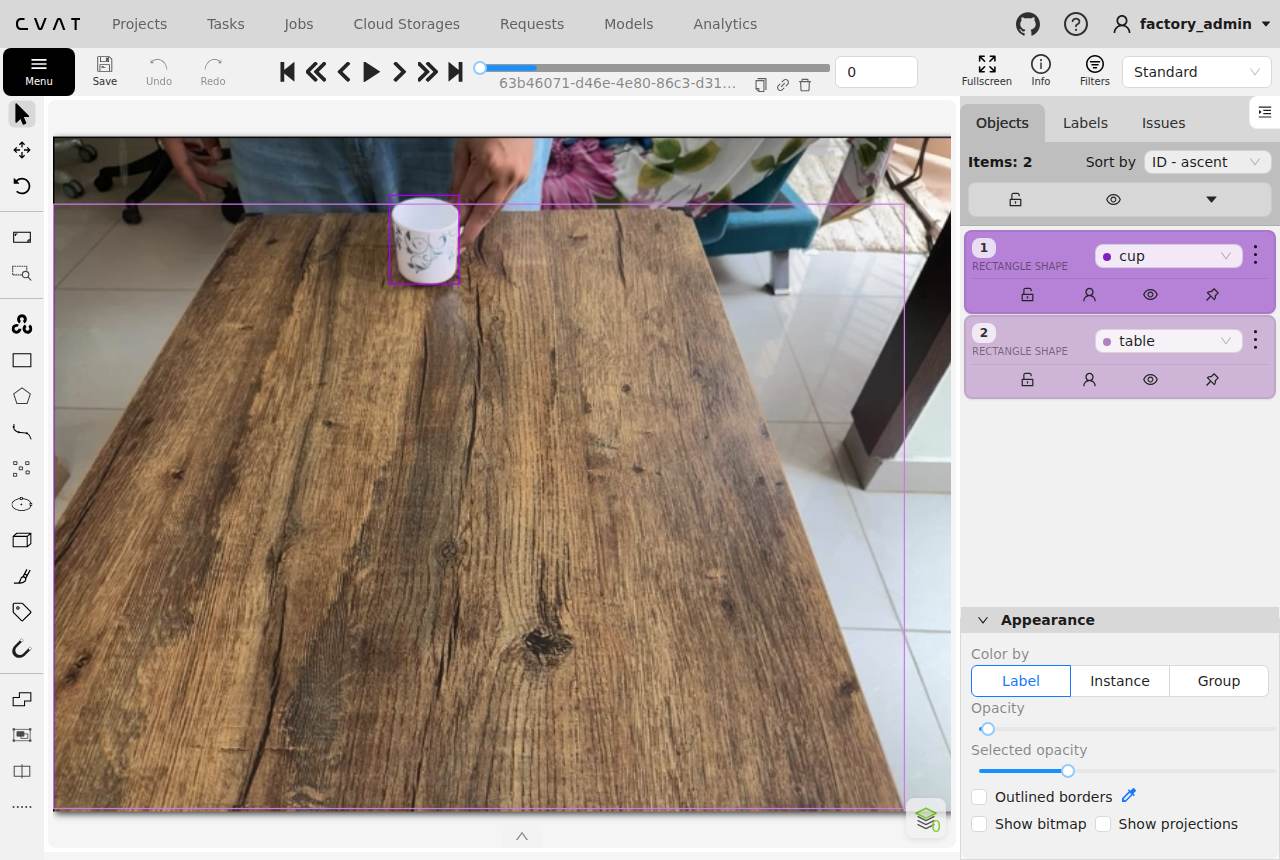
| Image and video | Vision model server with a confidence threshold and a label alias map | Bounding boxes pushed into the task only if it has no annotations yet |
| Text | Text model server per file | Label prediction saved beside the raw text, marked for review |
| Speech | Transcription model over the audio | Transcript draft aligned to segments |
The guardrails matter more than the models. A vision draft never touches a task that already has annotations. A text draft is skipped when a prediction already exists for the file. Nothing drafts twice, and nothing drafts over a human.
What stops a draft from silently becoming the label?
Three rules enforce the order.
First, status travels with the file. A text prediction is stored with its source file reference, the model output, and an explicit review flag. Until a human confirms it, the file reads as draft to everyone downstream.
Second, confidence and vocabulary are bounded. The vision server only proposes above a set threshold, and only labels in the project vocabulary pass through. Model-specific names are mapped to buyer terms before anything lands in the task, so annotators never see raw model vocabulary.
Third, humans work in the tool, not around it. Annotators correct boxes on the canvas and labels on the task view. The draft is a starting position they move, not a suggestion they approve blind.
Exhibits from our pipeline
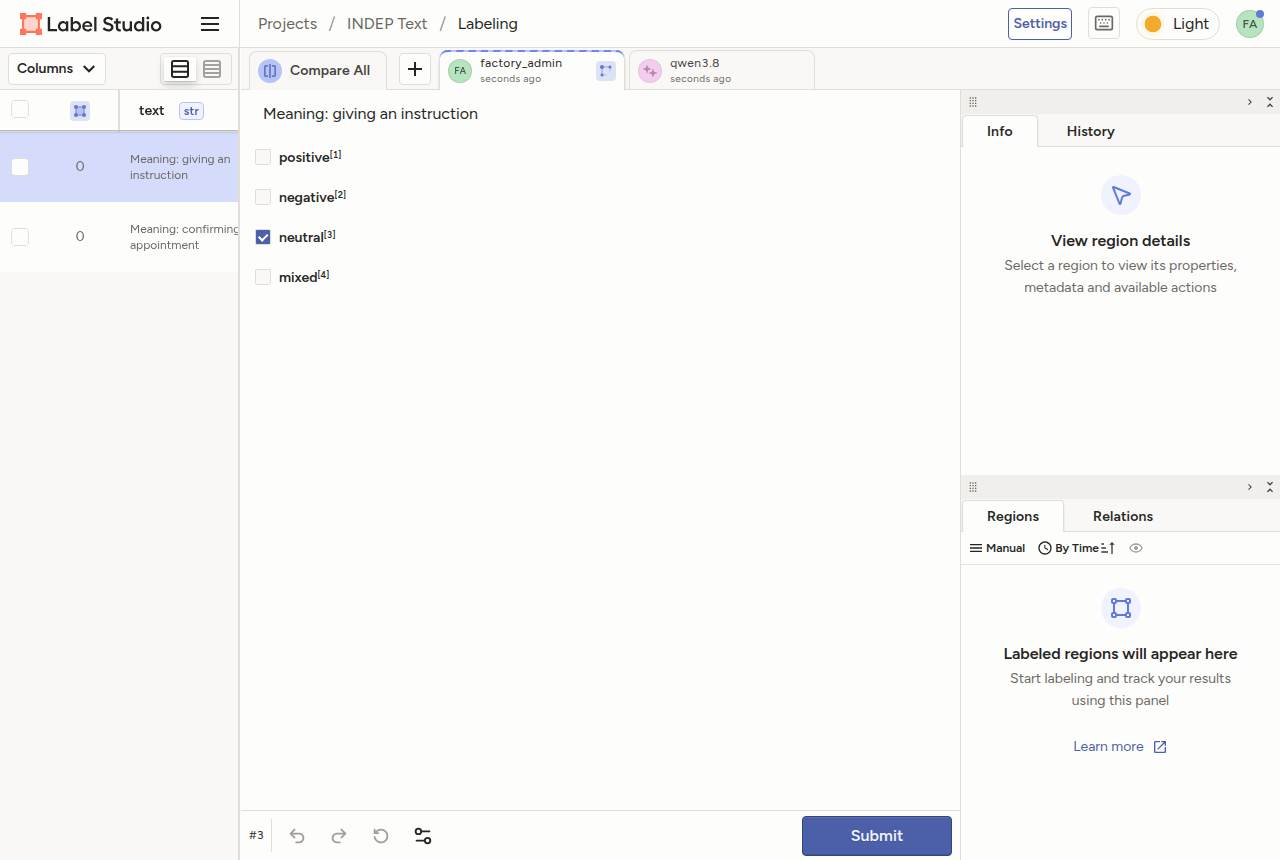
One record showing the draft state explicitly:
{"source_file": "04fec456-...e95e.txt",
 "model_output": {"results": [{"model_version": "qwen3.8:latest",
   "value": {"sentiment": "neutral", "emotion": "calm",
    "intensity": "medium", "moderation_decision": "safe"}}]},
 "status": "machine_first_pass", "human_review_required": true}
Exhibit 3 — The review flag is part of the data, not a process note somewhere else. Any file with this status cannot ship.
What this enables for you
You get manual-grade labels at better-than-manual speed and cost. Your reviewers check corrections instead of drawing from scratch. Your audit trail shows which labels started as drafts and who confirmed them, because the pipeline records both.
The throughput gain is real and so is the boundary: speed comes from the draft, trust comes from the human, and the system never confuses the two.
Start with a paid pilot. Both sides check fit before scaling. Request a pilot or Talk to us.
Questions buyers ask
Which models produce the drafts? A vision model server for boxes, a text model pass with the version recorded per file, and a Whisper-based pass for transcripts. Versions and thresholds are agreed per program, never hidden.
What confidence threshold gates vision drafts? One we set with you per program. Below it, no proposal reaches an annotator. Above it, every proposal still needs human confirmation.
Do drafts cost extra? No. Drafting is built into the pipeline, not a line item. You pay for verified labels.
Related reads
Pair with how we annotate and QA and CVAT and Label Studio in tandem.
Sources
- CVAT documentation — the visual annotation tool where drafts land as proposed boxes.
- Label Studio pre-annotations guide — the prediction-tab mechanism our text drafts use.
- OpenAI Whisper — the transcription engine behind speech drafts.
- First-hand: process claims above describe our own pipeline — draft guardrails, confidence bounds, review flags. The exhibits are verbatim outputs — real job screenshots and a real draft record — not illustrations.