Depth, Sensors, and Multimodal Data for Systems That Move

TLDR Flat images fall apart once your stack has to move through a real space. Posterior builds RGB-D with calibrated depth, motion sensor packs, and multimodal captures grouped under one manifest so you can train and test perception with geometry, motion, and time sync intact.
Flat images and isolated audio clips do not tell your robot where things are or how they moved. You need pixels tied to positions, and video tied to motion over time.
That is what this pack covers. RGB video in HD to 4K with aligned depth, point clouds and LiDAR where structure matters, plus accelerometer, gyroscope, and radar streams recorded alongside media and grouped per session.
How does RGB-D calibration work in practice?
You pick viewpoints, depth ranges, and environments. Indoor rooms, outdoor areas, constrained workspaces, and the conditions tied to your deployment.
We capture RGB and depth together and calibrate the rig so each pixel maps to a position in space. You get frames plus depth maps, and point clouds when your task needs full three dimensional structure.
Use it to test reconstruction, obstacle handling, and grasp interaction against conditions you named up front, not generic footage you hope will transfer.
What do motion signature packs record?
Some failures only show up in motion. A slip, a tilt, a sudden stop. Video alone will miss it.
Our sensor packs record accelerometer and gyroscope channels next to video and audio, with radar added when your task calls for range or movement through clutter. Because the streams are captured together, you can line up what the camera saw with how the device or platform moved during that same second.
This helps for egocentric action, handheld behavior, vehicle movement, and teleop robot action data where the path of the motion is part of the label.
How does one manifest hold every stream?
When you need video plus depth plus LiDAR plus audio plus sensor in one go, we group everything per capture session under one manifest.
Each pack ships with time sync info across streams, per file checksums for verification, and metadata that links each stream back to its capture conditions. For spoken components we cover English, Hindi, Kannada, Telugu, Tamil, Malayalam, Marathi, and Sanskrit, with more languages on request.
No stitching together disconnected sets. Your team can move straight to fusion and modeling.
| Stream | What you receive | Good for |
|---|---|---|
| RGB video HD to 4K | Frames with environment and viewpoint labels | Detection, tracking, egocentric tasks |
| Depth and point clouds | Calibrated depth maps, point clouds on request | Reconstruction, obstacle handling, manipulation |
| LiDAR | Range scans synced to video | Navigation, mapping, outdoor scenes |
| Sensor and radar | Accelerometer, gyroscope, radar where needed | Movement signatures, action timing, context |
Exhibits from our collection
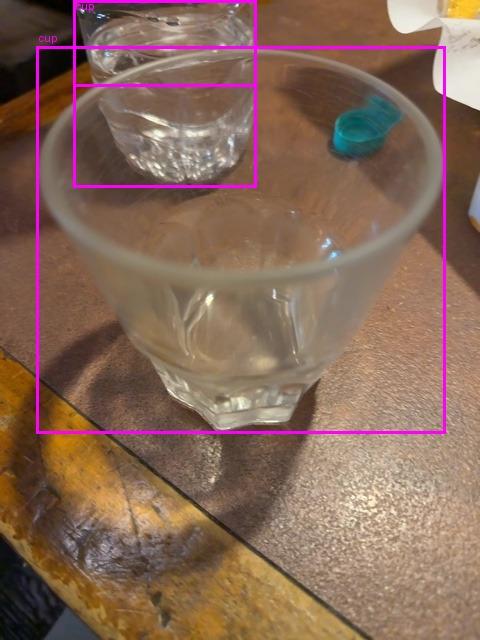
How the session resolves in the manifest — one record grouping every stream with its own checksum:
item_number,track,review_status,reviewer_code,sha256
02d9e8da-...,Image,accepted,REVIEWER_0001,f2cf26e58570...
b9132ff4-...,Speech,accepted,REVIEWER_0001,7f475d58cc2e...
How to spec this for robotics work
Fixed rigs give you repeatability. First person views give you egocentric coverage. Multi environment capture gives you clutter, lighting change, surface differences, and viewpoint shift in one set.
Tell us the scenes, the sensor mix, and the variation you care about. We build to that spec and you evaluate behavior against it.
Start small and check fit before you scale. Run a paid pilot to test calibration quality, sync accuracy, and coverage on your own evals.
Questions buyers ask
Can you work with our sensor rig? Tell us the scenes, the sensor mix, and the variation you care about. The pilot tests calibration quality and sync accuracy on your evals before anything scales.
Does depth ship without RGB? No. Depth arrives with its RGB counterpart, calibrated and time-aligned, grouped under one session record.
How do we verify sync ourselves? Time-sync info and per-file checksums ship per session. Your team fuses streams without reverse-engineering alignment. Request a pilot or Talk to us with your scene list and we will scope it.
Related reads
Pair with egocentric POV for robotics and robot action data.
Sources
- LeRobot dataset format (Hugging Face) — the open standard for multimodal robotics sessions our packs map to.
- NIST FIPS 180-4, Secure Hash Standard — the SHA-256 behind the per-file checksums in our manifests.
- First-hand: process claims above describe our own pipeline. The exhibits are verbatim outputs — a real session stream and manifest rows — not illustrations.