CVAT and Label Studio in Tandem: Vision in One, Language in the Other

TLDR: CVAT owns every visual track: images and video, boxes and action segments. Label Studio owns every language track: text, speech transcripts, translation, IVR intents. One manifest groups both sides per task, so a multimodal batch stays one delivery with one review verdict per file.
One tool for everything is how annotation goes vague. Video needs frame timelines and interpolation. Text needs taxonomies and span rules. A single interface does both badly. We run two specialized tools with a hard split and one manifest over both.
How is the work split, and why does it hold?
| Tool | Owns | Why it fits |
|---|---|---|
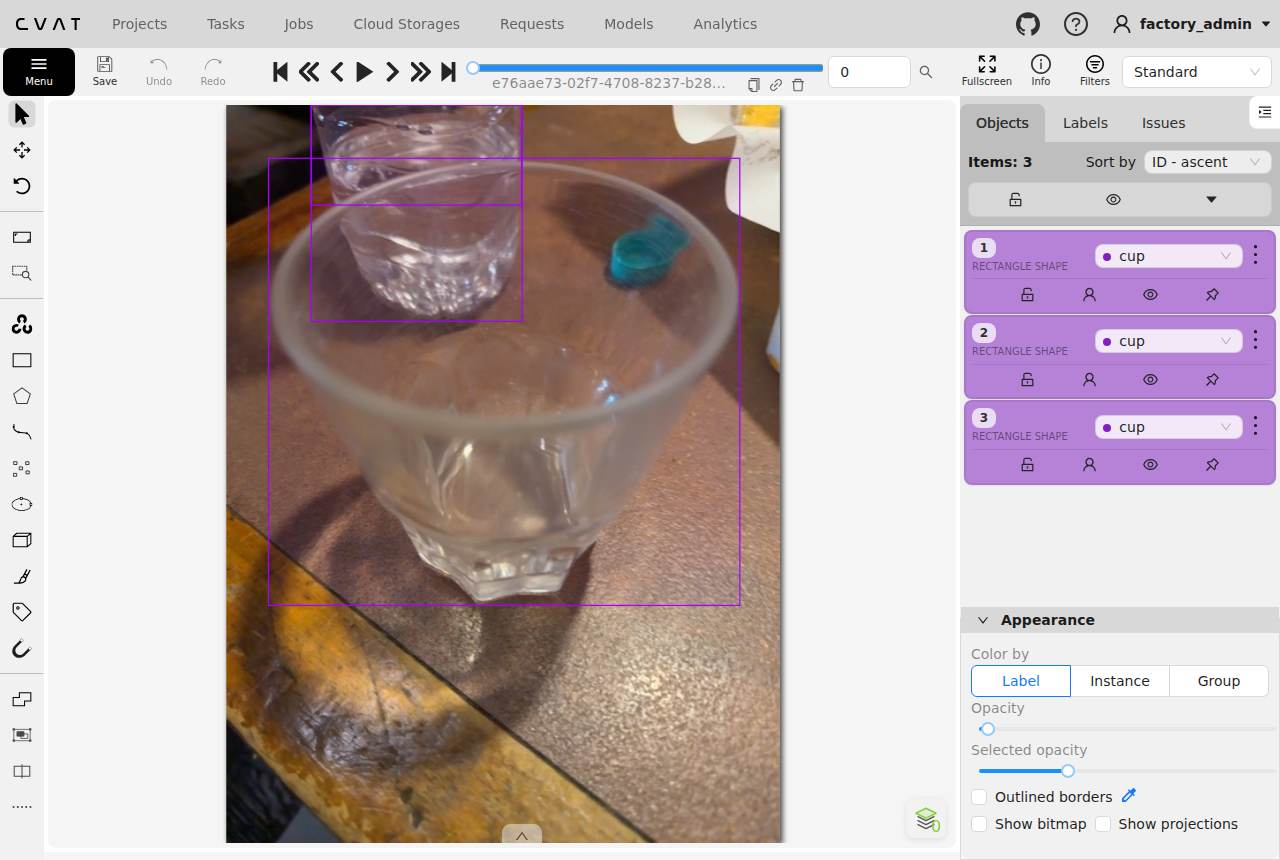
| CVAT | Images, video, bounding boxes, action segments, tracks | Frame canvas, interpolation across time, per-label review |
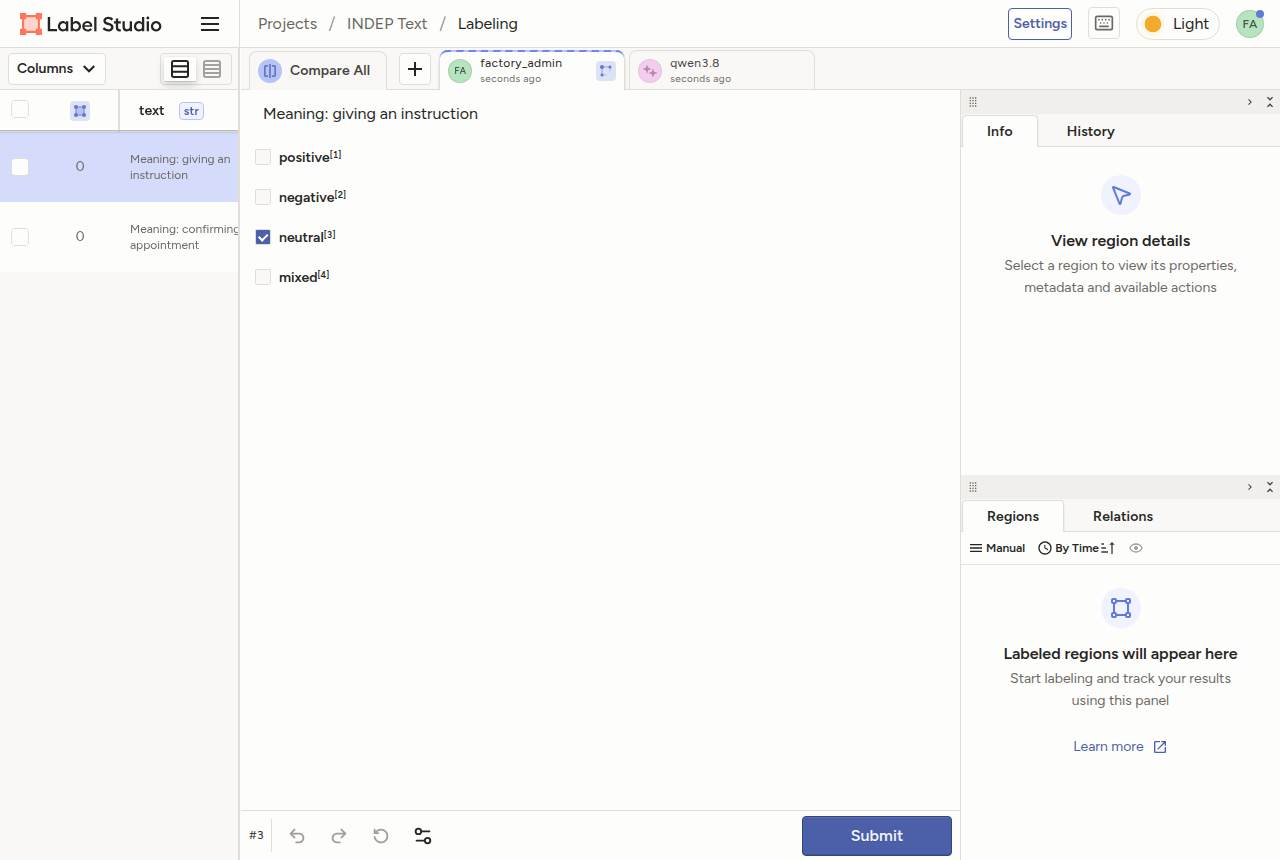
| Label Studio | Text labels, speech transcripts, translation pairs, IVR intents | Choice and span interfaces, prediction tabs beside human tabs |
The split is enforced, not suggested. The image project inside Label Studio stays archived so visual work has exactly one home. When a new batch arrives, the manifest groups files by task, and visual groups open as CVAT tasks while language groups import into Label Studio projects. Nobody wonders where a file gets worked on.
How do files flow without getting lost?
Collection writes every file to the manifest with its task reference. A sync step reads the manifest and opens one grouped CVAT task per visual task, so repeated takes of the same shot sit together as frames of one job instead of scattered singles. Language tasks import into their Label Studio projects with model predictions pre-attached, ready for correction.
Machine drafts follow the same split. Vision predictions land in CVAT through its API. Text predictions land beside raw files and surface as prediction tabs in Label Studio. Speech transcripts draft from the transcription model into the speech projects. Each draft path ends at a human queue in the right tool.
Exhibits from our pipeline
item_number,track,review_status,reviewer_code,sha256
02d9e8da-...,Image,accepted,REVIEWER_0001,f2cf26e58570...
b9132ff4-...,Speech,accepted,REVIEWER_0001,7f475d58cc2e...
Exhibit 3 — The manifest over both: one record per file regardless of which tool worked it, with the reviewer verdict and checksum in the same row.
What this enables for you
Multimodal batches arrive coherent. Your video labels and your transcript labels were built against the same brief, reviewed under the same bar, and delivered under one manifest. Engineers parse one delivery. Reviewers check previews from both tools against one rubric. Compliance traces any file to its task, its draft, its annotator, and its reviewer without caring which interface was involved.
Specialized tools, single pipeline, one verdict per file.
Start with a paid pilot. Both sides check fit before scaling. Request a pilot or Talk to us.
Questions buyers ask
What if our batch is vision-only? Then the CVAT side runs alone. The manifest keeps the same shape, so adding language tracks later changes nothing structural.
Do our reviewers need to work in these tools? No. Buyers review through burned-in previews and the manifest, with timestamped notes. The tools are ours to operate.
Who resolves a conflict between streams? You do. The ruling becomes a versioned guideline update, and every affected file traces to the version in force when it shipped.
Related reads
Pair with semi-automated annotation and how we annotate and QA.
Sources
- CVAT and documentation — the visual side of the split.
- Label Studio and its pre-annotations guide — the language side and the prediction-tab mechanism.
- First-hand: process claims above describe our own pipeline — the enforced split, manifest-grouped tasks, one-manifest delivery. The exhibits are verbatim outputs — real screenshots from both live tools — not illustrations.